A new study led by DBEI faculty members Drs. Sean Hennessy, Charles E. Leonard, Warren B. Bilker, Kacie Bogar, and a Postdoctoral Researcher at the Center for Real-World Effectiveness and Safety of Therapeutics (CREST), Sam (Yu-Chia) Hsu, offers new insight into national treatment patterns for opioid use disorder (OUD).
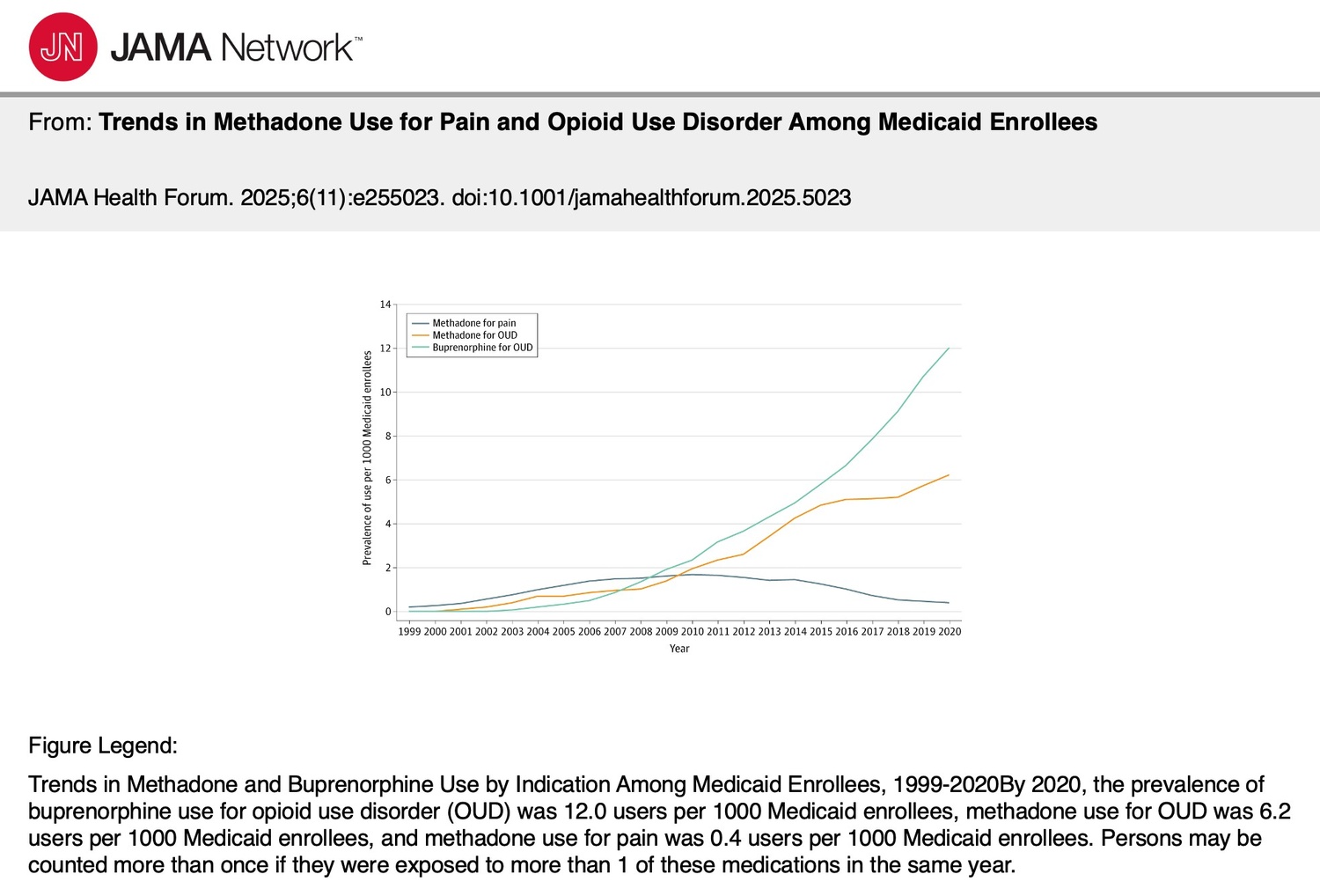
Published as a research letter in JAMA Health Forum, the study examines trends in methadone and buprenorphine use among Medicaid enrollees from 1999 to 2020. These medications are the most effective treatments for opioid use disorder (OUD), yet prior studies offered conflicting evidence about methadone use. Using a complete national Medicaid dataset, our team found that both methadone and buprenorphine use for OUD increased over time, with buprenorphine reaching 12.0 users per 1,000 enrollees and methadone 6.2 per 1,000 by 2020. In contrast, methadone prescribed for pain declined sharply to 0.4 per 1,000. These findings clarify that methadone use for OUD has not decreased as previously suggested and highlight persistent unmet need—only about 25% of individuals with OUD receive medication treatment. This work, supported by the National Institute on Drug Abuse and the National Institute of Mental Health, involved collaboration among experts in pharmacoepidemiology, addiction medicine, and health policy at the University of Pennsylvania. Understanding these trends is critical as policymakers consider expanding methadone access through initiatives like the Modernizing Opioid Treatment Access Act.